Crime Files Network

www.crimefiles.net/info.

MUTILATED BODIES BY THE DOZENS LEFT ON HIGHWAY IN MEXICAN DRUG WAR

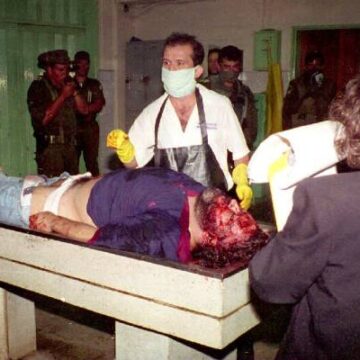
Forty-nine decapitated and mutilated bodies have been found dumped on a highway connecting the northern Mexican metropolis of Monterrey to the US border in what is the latest outburst in an escalating war of terror among drug gangs.

Mexico’s organised crime groups often abandon multiple bodies in public places as warnings to their rivals, though Nuevo Leon state Attorney-General Adrian de la Garza said he did not rule out the possibility that the victims were US-bound migrants.

The bodies of the 43 men and six women were found in the town of San Juan on the highway to the border city of Reynosa about 4am on Sunday, forcing police and troops to close off the highway. Reports said the bodies were stuffed into plastic bags.

A federal policeman guards the area where dozens of bodies, some of them mutilated, were found on a highway.
A federal policeman guards the area where dozens of slaughtered & mutilated bodies,were found on a highway. Photo: AP

Nuevo Leon state security spokesman Jorge Domene said at a news conference that a banner left at the site bore a message with the Zetas drug cartel taking responsibility for the massacre.

Domene said the fact the bodies were found with the heads, hands and feet cut off will make identification difficult. The bodies were being taken to Monterrey for DNA tests.

Mexican drug cartels have been waging an increasingly bloody war to control smuggling routes, the local drug market and extortion rackets, including shakedowns of migrants seeking to reach the United States.

A drug gang allied with the Sinaloa cartel left 35 bodies at a freeway overpass in the city of Veracruz in September, and police found 32 other bodies, apparently killed by the same gang, a few days after that. The goal apparently was to take over territory that had been dominated by the Zetas. Twenty-six bodies were found in November in Guadalajara, another territory being disputed by the Zetas and the Sinaloa group.

So far this month, 23 bodies were found dumped or hanging in the city of Nuevo Laredo and 18 were found along a highway south of Guadalajara, Mexico’s second-largest city.

In April, police found the mutilated bodies of 14 men in a minivan abandoned in downtown Nuevo Laredo, along with a message from an undisclosed drug gang. Also in April, the tortured and bound bodies of seven men were dumped in the Pacific port city of Lazaro Cardenas along with messages signed by allies of the Sinaloa drug gang.

Officials last year found 183 bodies in mass graves in San Fernando, in the Tamaulipas state. They were believed to have been migrants killed by the Zetas drug cartel. Another 72 migrants, many of them from Central America, were found slain in San Fernando in 2010.

AP

Share and Enjoy

  • Facebook
  • Twitter
  • Delicious
  • Digg
  • StumbleUpon
  • Add to favorites
  • Email
  • RSS


RESEARCHERS ON TRIAL FOR ALZHEIMERS FRAUD CASE

(Reuters) – Two Harvard teaching hospitals and a prominent Alzheimer’s disease researcher accused of using falsified data to obtain a government research grant are set to stand trial after a federal appeals court said this week that a lower court erred when it dismissed the case.

The lawsuit accuses Marilyn Albert, a former professor of psychiatry at Harvard Medical School, and Massachusetts General Hospital (MGH), where she was conducting research, of submitting a grant application based on manipulated data.

The data showed results from a trial were scientifically significant when in fact they were not, according to the lawsuit.

Brigham and Women’s Hospital, which collaborated on the research, is also a defendant in the case. The lawsuit was brought in 2006 under the False Claims Act, a 150-year-old federal law designed to recover government funds appropriated through fraud.

This is the first time a lawsuit dealing with alleged scientific fraud has been allowed to progress to trial under the False Claims Act, according to Michael Kohn, a lawyer with Kohn, Kohn & Colapinto in Washington, D.C.

Kohn represents the whistle-blower in the case, Kenneth Jones, a former statistician at Massachusetts General Hospital, who filed suit in 2006 claiming the defendants violated the act by including false statements in a $15 million grant application to the National Institutes of Health (NIH).

The case was dismissed in the lower court three days before it was due to go to trial. Barring settlement, a new trial could begin later this year in U.S. District Court in Boston, Kohn said.

If the defendants are found guilty, they could pay as much as $45 million to the U.S. government. By law, whistle-blowers in such cases receive 15 percent to 30 percent of funds recovered.

Albert, who is now director of the Division of Cognitive Neuroscience at Johns Hopkins University School of Medicine, declined to comment except to say in an email: “I am confident that there was no misconduct involved.”

Both hospitals said they are confident the researchers acted appropriately and according to the highest standards of scientific integrity.

“While it is disappointing that additional time and resources will have to be devoted to defending the institution and its investigators, the MGH remains confident that the resolution of the case will show that the allegations are without merit,” Massachusetts General said in a statement.

Brigham and Women’s responded with an identical statement.

INFLUENTIAL RESEARCH

Albert’s research was part of an ongoing investigation into the structure of the brain as it progresses toward Alzheimer’s disease. She specifically hoped to show that it might be possible to predict, years in advance, who might be destined to develop the disease, based on measurements taken over time of certain regions of the brain.

The results of the trial were published in the scientific journal Annals of Neurology in April 2000 and, according to Jones, proved extremely influential.

“The data appeared to confirm what had been suspected by some very prominent scientists, which is that Alzheimer’s disease is associated with decreased blood flow to the brain,” Jones said in an interview on Thursday. “The MRIs showed the volume of certain parts of the brain was decreasing in the people who were sick.”

There are multiple theories about the cause of Alzheimer’s disease.

In March 2001, Jones discovered what he believed to be anomalies in the research, specifically in data produced by one of the researchers, Ronald Killiany. The lawsuit alleges that Killiany revised his initial MRI measurements to prove the hypothesis of the trial.

Killiany, now an associate professor at Boston University School of Medicine, did not return a phone call or email seeking comment. Kohn said he was not named as a defendant. In retrospect, Kohn said, “He probably should have been.”

Jones took his concerns to Albert, who authorized an investigation into the matter by Killiany’s boss, Mark Moss. She declined to appoint an independent investigator, as requested by Jones, according to the lawsuit.

Moss concluded that Killiany’s second set of measurements was more accurate than the initial set. Albert accepted Moss’s conclusion and proceeded to apply for an NIH grant in November 2001, according to the lawsuit.

The defense argued before the appeals court that it would not have been unusual or inappropriate for Killiany to re-measure patient brain scans as long as he remained blind to the clinical status of the participants, and that this was a matter for scientific debate.

This argument was accepted when the case was initially heard by the lower court in the United States District Court for the District of Massachusetts. On that basis, it dismissed the case in October 2010. Kohn said the court ruled that scientific fraud could not be brought under the False Claims Act, since the case related to a scientific dispute, not fraud.

The appeals court, however, rejected the argument, saying, “We disagree that the creation of the data in question was necessarily a matter of scientific judgment.”

The court noted that the lower court’s determination “misses the point that the various results produced in this case were obtained by one scientist purportedly using the same protocol.”

The government’s Office of Research Integrity declined to say whether it is investigating the case.

Jones said he hopes the trial will shed light on the issue of scientific misconduct.

“My interest is in correcting the science and bringing this academic cheating to light,” he said, “and maybe sending a message saying, ‘You’re being watched, and you shouldn’t do it.’”

The case is: U.S. ex rel. Jones v. Brigham and Women’s Hospital, et al, 1st U.S. Circuit Court of Appeals, No: 10-2301.

(Editing by Michele Gershberg and Douglas Royalty)

Share and Enjoy

  • Facebook
  • Twitter
  • Delicious
  • Digg
  • StumbleUpon
  • Add to favorites
  • Email
  • RSS

‘FLASHBACK’ VIRUS PICKPOCKETS $10K PER DAY FROM GOOGLE

A virus infecting Macintosh computers is picking Google’s pocket by hijacking advertising “clicks”, tallying as much as $10,000 daily, according to internet security firm Symantec.

A component of the widespread Flashback virus targets Google search queries made using Chrome, Safari, or Firefox browsers and directs people to pages dictated by the hackers, Symantec said Tuesday in a blog post.

Those clicking online ads can be re-routed to websites of different merchants or publishers, with hackers getting paid the eight cents or so that would have been paid to Google for the referral, analysis of the virus showed.

“Google never receives the intended ad click,” Symantec researchers said.

“This ultimately results in lost revenue for Google and untold sums of money for the Flashback gang.”

Based on the hundreds of thousands of Macintosh computers believed to be infected with the Flashback virus, the amount of money raked in by hackers could climb to about $10,000 daily, Symantec estimated.

Apple last month released a Macintosh software update with a tool to purge Flashback from computers.

“If the Flashback malware is found, a dialog will be presented notifying the user that malware was removed,” California-based Apple said at a support website.

Apple has also said it has patched the weakness exploited by the virus and is working to disrupt the command network being used by hackers behind the infections.

The virus took advantage of a weakness in Java programs, according to Apple.

The malicious software does its dirty work with directions received from computer servers “hosted by malware authors” and Apple is collaborating with internet service providers to “disable this command and control network.”

Computer security specialists have warned that more than 600,000 Macintosh computers may have been infected with a virus targeting Apple machines.

Hackers tricked Mac users into downloading the virus by disguising it as an update to Adobe Flash video viewing software.

Flashback Trojan malware tailored to slip past Mac defenses is a variation on viruses typically aimed at personal computers (PCs) powered by Microsoft’s Windows operating systems.

“All the stuff the bad guys have learned for doing attacks in the PC world is now starting to transition to the Mac world,” McAfee Labs director of threat intelligence Dave Marcus told AFP.

Share and Enjoy

  • Facebook
  • Twitter
  • Delicious
  • Digg
  • StumbleUpon
  • Add to favorites
  • Email
  • RSS

A court was told how a woman was repeatedly stabbed by her ex in a joint suicide claim

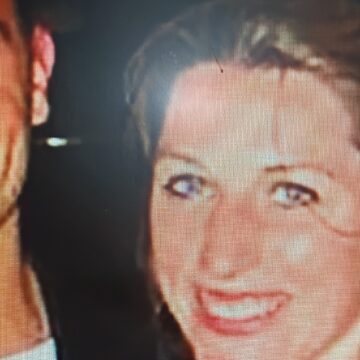
A woman has told a court how her ex-boyfriend, a former contestant on Australian Survivor, tried to kill her and himself, telling her he “wanted to die together so we could be together for eternity”.

Samantha Holland jumped off the balcony of the third floor apartment she shared with Joel Betts in a desperate attempt to save her life after he stabbed her repeatedly in the back and neck on April 17, 2010.

Betts, 32, a socialite, who became a Foxtel presenter after appearing on Channel Nine’s Australian Survivor, pleaded guilty in February to wounding with intent to murder Ms Holland

Broadcaster Alan Jones will support the accused whilst he is in jail awaiting sentence

During a sentencing hearing at the Sydney District Court on Friday, Ms Holland was shaking but composed as she described how Betts tried to stop her from leaving their Chippendale unit.

“I’m still haunted by the look in his eyes as he towered over me and stabbed me in the neck,” she said.

Betts told the court he endured a traumatic childhood at the hands of his violent stepfather and was in financial difficulty in the lead-up to the attack.

He and Ms Holland, then 23, had broken up, and she had gone to the apartment to collect her belongings when he confronted her, asking her to stay.

When she refused, he stabbed her up to eight times before turning the knife on himself, inflicting serious wounds to his stomach. He then stabbed her a further 20 times.

Betts said during the 1½-hour attack, Ms Holland agreed with him that they should die together, but he now realised she said it only in an attempt to escape.

He said a note found in the apartment that read, “you know that I love you but I hate you because I know I can never replace you”, was in fact lyrics from a Bon Jovi song he was learning on the guitar a week earlier, and not an indication that the attack was premeditated.

“It was very spontaneous,” he said of picking up the knife and stabbing her.

However, he said he pleaded guilty as he accepted that for a “fleeting moment” he intended to murder her.

Her clothing soaked in blood, she fled to the third-floor balcony, slipping and falling on to the balcony of the unit below before finally escaping to safety.

Broadcaster Alan Jones said he had known Betts for 10 years and had met Betts in the week of the attack to give advice on a business he was developing that linked charities and the corporate sector.

Jones said he would continue to support Betts while he was in jail.

“I have seen these things in Shakespearean plays. It just happens. I know he is unbelievably emotional and regretful when he talks about it.”

Betts will be sentenced at a later date.

Share and Enjoy

  • Facebook
  • Twitter
  • Delicious
  • Digg
  • StumbleUpon
  • Add to favorites
  • Email
  • RSS

POLICE ARREST OVER 550 PERSONS IN CONNECTION WITH BIKIE CRIMES

In the words of a senior officer, the best weapon NSW police have in the fight against crime is “in-your-face policing”.

This, said south-west metropolitan region commander Frank Mennilli, led to almost 1000 charges being laid over the weekend as police state-wide went out to “crack down on crime”.

Under the guise of Operation Spartan, established in January following a spike in gun crime and increased gang-related activity, police hit the streets in big numbers – about 3000 officers from across the NSW Police Force tasked with flexing some law-enforcement muscle.

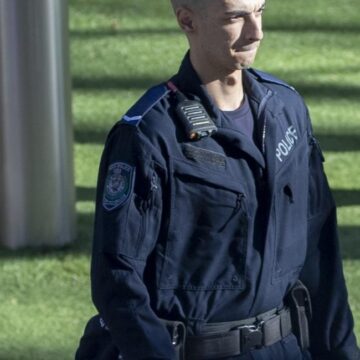
Crackdown ... a policeman guards two suspects.A policeman guards two suspects.

But the action, it seems, was primarily designed to round up those already known to be likely mischief-makers, targeting “people with outstanding arrest warrants” and carrying out “bail compliance checks”.

Mr Mennilli explained Operation Spartan officers carried out 1871 inspections of businesses such as clubs, hotels and tattoo parlours, as well as 993 visits to individuals with links to gangs.

“In addition, we conducted 1783 person searches and 419 vehicle searches … we seized 14 firearms, 17 knives, quantities of illegal and prescription drugs and recorded 1401 intelligence reports,” he said.

"In-your-face policing" ... Operation Spartan.“In-your-face policing” … Operation Spartan.

Mr Mennilli said the operation was a huge success, saying that it was not just about arrests but about intelligence gathering too.

“Every new piece of information we collect helps us to better understand these criminals, their gangs and their methodology, which is the key to dismantling and disrupting criminal activity,” he said.

“We will not rest until we have all illegal firearms and weapons off our streets and all the people involved in these crimes are found, locked up and put before a court.”

As a result, 555 offenders were arrested with 908 charges laid.

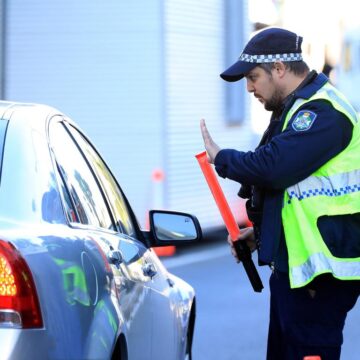
In addition, more than 23,000 random breath tests were conducted with 107 people charged with drink-driving.

NSW Police periodically conduct such blitzes, the latest coinciding with an increased focus on gun-related crime following months of tit-for-tat shootings.

Last week, raids on properties connected to known members of outlaw motorcycle gangs prompted claims of a PR exercise, which were rejected by Assistant Commissioner Mal Lanyon.

Share and Enjoy

  • Facebook
  • Twitter
  • Delicious
  • Digg
  • StumbleUpon
  • Add to favorites
  • Email
  • RSS

MURDER OF HER CHILDREN GETS MOTHER A SLAP ON THE WRIST BECAUSE

‘SHE WAS ON DRUGS’??????? EXECUTE THE WOMAN WOULD BE MORE IN LINE

An Australian mother has been convicted in Canada of the manslaughter of her two young sons after their bodies were found floating in a bathtub.

An Alberta judge found Allyson McConnell, 33, formerly from Gosford on the NSW Central Coast, not guilty of the more serious second degree murder charges.

Justice Michelle Crichton ruled there was reasonable doubt McConnell was able to form the intent to murder 10-month-old Jayden and two-year-old Connor by drowning them in a bathtub in the family’s Millet, Alberta, home on February 1, 2010.

After an emotional two-week trial in Wetaskiwin, Justice Crichton took a month to come to Friday’s verdict.

McConnell, who has made repeated suicide attempts and has been held in the psychiatric ward at an Alberta hospital, will be sentenced on May 9.

In 2006, McConnell worked at a Canadian ski resort and met local man Curtis McConnell.

They wed in 2007, had Jayden and Connor, but in 2009 the marriage was heading for divorce and a judge prevented McConnell from taking her sons to Australia.

Mr McConnell, who found his deceased sons in the bathtub, has filed a $C940,000 ($A913,500) civil suit against his former wife.

McConnell admitted drowning her sons, but her legal team argued she did not form the intent to kill them.

Forensic computer analyst Dwayne Pilling told the court internet searches found on McConnell’s computer included ‘‘How long does it take to drown?’’, ‘‘How long does it take to die from strangulation?’’, ‘‘electrocution by hair dryer in bathtub’’ and ‘‘How long can you go without food and water?’’

After drowning her sons, McConnell drove to a Toys R Us store, then walked to a nearby hotel, ordered lunch, became emotional and went to a freeway overpass and jumped off onto traffic below, the court heard.

Editor-It’s a sick, sick world when you  get off a murder charge if you can substantiate you were drug  f…cked at the time. a bullet in the head is just too good and kind for these people.

Are there feelings for the persons who were killed?

AAP

Share and Enjoy

  • Facebook
  • Twitter
  • Delicious
  • Digg
  • StumbleUpon
  • Add to favorites
  • Email
  • RSS

Teen and boy shot by police in car chase

Police shot a boy and a young man at Potts Point in Sydney’s east this morning after the car they were in drove on to the footpath to escape pursuing officers.

Police said a 14-year-old driver and his 18-year-old front-seat passenger were taken to hospital with gunshot injuries after officers fired shots at their car, which was driven on to the footpath of Darlinghurst Road shortly after 4am.

The 14-year-old was shot once in the chest and once in the arm, and the 18-year-old was shot once in the neck, police said. It is reported that the young offenders were aboriginals.

Witnesses reported that the Honda Civic sedan, which was later confirmed stolen, entered heavy pedestrian traffic along the footpath and hit a woman, 29, who was taken to hospital with chest injuries. Police said the woman was pinned under the car.

Police said four other males, aged between 13 and 24, were in the back seat of the car at the time. They were uninjured and are being interviewed.

The injured are being treated at St Vincent’s Hospital. The boy is in a serious but stable condition, while his passenger’s injuries are not life-threatening. The condition of the woman is not known.

Assistant Commissioner Mark Murdoch said: “People literally jumped for their lives.

“Police pursued that vehicle on the footpath by foot, they attempted to stop the vehicle.

“That vehicle struck a female pedestrian. That female pedestrian was pushed under the front of the vehicle. In an attempt to protect that person they [police] discharged a number of shots into the vehicle.

“Whether that decision turned out to be the right decision is a matter for the critical investigation team … My advice is that the police has little other option.”

Police confirmed the males are indigenous and were unarmed at the time.

Assistant Commissioner Murdoch said the two constables recognised the Redfern youths driving the car.

“The police recognised the vehicle, they recognised the people in the car,” he said.

“I would suggest, given the driver of the vehicle was 14, that’s probably a good reason why they approached the car.

“As they approached the car, it is my information that the people in the car saw the police approaching; they’ve taken action to avoid apprehension.”

Assistant Commissioner Murdoch said officers would be in touch with the Redfern community to fill them in on what happened.

“I would hope [the community] understands that we need to investigate exactly what happened and why it happened,” he said.

“They would also understand, given the relationship that police have with the Redfern community, is that as soon as we know something, they’ll know. And they get the right information rather than speculate.”

Assistant Commissioner Murdoch said more officers would be deployed in Redfern tonight if the need arose.

He described the shooting as a tragedy.

“[It's] an absolute tragedy for all involved,” he said.

“No one likes to see this sort of thing happening, particularly in such a public area. The police don’t go to work expecting to shoot someone.”

Despite numerous shootings in Sydney recently, Assistant Commissioner Murdoch said the busy entertainment precinct in Kings Cross was still safe.

On April 9, a man was shot in the shoulder at Kings Cross nightclub Bada Bing.

Police treat an injured male after the shootings in Kings Cross.Police treat an injured male after the shootings in Kings Cross. Photo: Channel Ten

Yesterday the NSW government banned Bikie gangs from owning tattoo parlours and wearing their colours in licensed Kings Cross venues after two drive-by shootings hours earlier.

Police believed those attacks were part an ongoing dispute between rival gangs, the Hells Angels and Nomads.

A total of 52 shootings have rocked Sydney this year with most attributed to criminal organisations and gangs.

Police officers have also been involved in the gun violence. Ryan Pringle, who was armed with a knife and a crossbow, was Tasered by police before they shot him dead at a commune in northern NSW on Monday.

On March 25, a senior police officer shot and killed 34-year-old man Darren Neill at the Westfield shopping centre at Parramatta.

Sourc

Share and Enjoy

  • Facebook
  • Twitter
  • Delicious
  • Digg
  • StumbleUpon
  • Add to favorites
  • Email
  • RSS

NORWAYS MASS KILLER PLEADS NOT GUILTY TO MURDERING 77 PEOPLE

Norway’s mass-killer Anders Behring Breivik will be forbidden from reading in court a new political manifesto he wrote in prison, and his testimony will not be broadcast live like the rest of his trial, judges have ruled.

Breivik’s trial over the killing of 77 people in related attacks last July was due to begin early tonight, AEST, with authorities concerned that he be restrained from using the hearing as a soap-box to air his extreme right-wing views.

Earlier this month a pre-trial interview that he was negotiating with US news service CNN was shelved after the talks were revealed in Norwegian media.

The trial will begin with opening addresses by lawyers but then Breivik will have five days in which to give his own evidence. He has confessed to the killings but claims he is not guilty on the grounds of self-defence.

He told police the attacks on government buildings in Oslo and on a Labour Party youth camp on Utoya Island were payback to Norway’s left wing for having allowed immigration.

Breivik’s original manifesto, posted on the internet just before his assaults, attacked what he called “the Islamicisation” of Europe.

His chief defence lawyer, Geir Lippestad, has warned Norwegians to brace themselves for Breivik’s testimony because his only regret was that he did not kill more people.

“He will not only defend [what he did] but will also lament, I think, not going further.”

The mental state of Breivik, 33, will be a central question for the judges. An initial assessment by two psychiatrists concluded he had paranoid schizophrenia, which would mean he was not legally responsible for his crimes. Breivik, who denies he is insane, called this diagnosis “the ultimate humiliation”.

A new assessment delivered last week by a second team of doctors diagnosed him instead as having narcissistic personality disorder. This means he has grandiose ideas of his own importance and a sense that he is special, and that he lacks empathy – but that he is sane.

The Oslo District Court has built a special room that can seat 200 to hold the trial. Spectators will include some of the 800 international journalists accredited to cover the proceedings as well as survivors and relatives of victims.

Thick glass partitions will separate victims and families from Breivik, and police are expected to seal off streets around the court building.

Breivik told police he was part of a larger organisation modelled after medieval crusaders the Knights Templar but police believe he acted alone.

The trial is expected to last for 10 weeks.

Share and Enjoy

  • Facebook
  • Twitter
  • Delicious
  • Digg
  • StumbleUpon
  • Add to favorites
  • Email
  • RSS

Late last year his house was firebombed. In January he was shot in the upper thigh and hospitalised. Now, Darko Janceski is dead.

The 32-year-old was gunned down in front of his parents’ home at Berkeley in an execution-style killing about 5.10pm on Saturday. He died on the way to hospital after being shot several times, once in the heart, by a gunman who quickly fled the house in Gannet Avenue on a motorcycle.

His father was also injured after racing out of the house and attacking the shooter, who was driving away, with what witnesses described as a metal pole.

Police would not say whether they believed the killing was linked to the earlier attacks.

“We cannot be tunnel-visioned in this investigation; we’ve got to look at all avenues,” Lake Illawarra police Detective Superintendent Wayne Starling said yesterday.

Police believed Mr Janceski was targeted and Saturday’s shooting was not random, he said.

“I don’t believe neighbours or the wider community has anything to be concerned about at the moment.”

He also confirmed a firearm was found at the scene, but it is unknown whether the weapon was the one used to kill Mr Janceski.

The dead man had previously been linked to the investigation into the shooting death of Saso Ristevski, who was slain in front of his parents at their Lake Heights home last September, and the disappearance of Goran Nikolovski, whose burnt-out car was found in bushland on Macquarie Pass late last year and is presumed dead.

Police merged the strike forces created to investigate the two cases.

The strike force spoke to Mr Janceski days before he was shot in the leg.

Police said Mr Nikolovski and Mr Ristevski knew Mr Janceski but did not confirm the nature of their relationship.

Police have now formed Strike Force Eave, led by Homicide Squad and Lake Illawarra detectives, to look into the circumstances surrounding Mr Janceski’s death.

Mr Starling said the separate investigations could be joined.

“It depends what comes out of the initial inquiries over the next couple of days,” he said.

“The father has also raced out when he has heard the gunshots fired and engaged in a fight with the person that fired the shots,” Mr Starling said, adding Mr Janceski’s father suffered superficial injuries.

A witness said he heard “three or four gunshots” and later saw Mr Janceski’s father hit the gunman with a metal pole.

The motorcyclist fled north along Gannet Avenue and escaped up a steep grass hill at the end of the dead-end street.

Several witnesses said the suspected killer had been riding a blue and white trail bike. Emergency services scoured the hill for evidence yesterday afternoon.

A police helicopter also searched the surrounding area for any signs of an abandoned motorbike.

“Already we’ve secured the crime scene, DNA samples have been taken, a large number of witnesses are still to be interviewed in relation to the matter and also there will be a number of persons of interest that will be spoken to as well,” Mr Starling said.

This year, two men were charged with attempted murder in relation to the first shooting attack against Mr Janceski, although police yesterday said inquiries were continuing.

Mr Janceski had also appeared in Wollongong Local Court in December to face allegations he ordered a man out of a $33,000 car and stole the vehicle. He was accused of demanding a man pay him $15,000 or he would steal his car.

Share and Enjoy

  • Facebook
  • Twitter
  • Delicious
  • Digg
  • StumbleUpon
  • Add to favorites
  • Email
  • RSS

Cannibal gang cooked victims

into meat pies & pastries

A twisted version of the saying ‘Indulging in pleasures of the flesh’

Details of a purported Brazilian cannibal gang that allegedly murdered at least five women before eating their flesh – and in some cases selling it in the form of meat pastries – have shaken the country.

Details of the incident began to trickle out after the newspaper Folha de Sao Paulo released a video on its website at the weekend.

In the video Isabel Cristina da Silva, 51, said she and her husband and his 25-year-old girlfriend had eaten 10 kilograms of human flesh over the course of five days in the city of Garanhuns.


The procedure was part of a purification ritual for a sect to which they belonged, identified as Cartel.

The trio also apparently took some of the meat and cooked it into meat pastries which they sold on the street.

Investigators, who tracked the group down in the course of a missing persons case, said they had found buried human remains on the property where the three lived. The group was arrested on Friday.

The five-year-old daughter of one of the alleged victims was also found at the home, according to media reports.

Da Silva’s husband has reportedly written a book, Revelations of a Schizophrenic, in which he details how he kills a woman and eats her flesh.

Share and Enjoy

  • Facebook
  • Twitter
  • Delicious
  • Digg
  • StumbleUpon
  • Add to favorites
  • Email
  • RSS
Subscribe to Crime Files Network